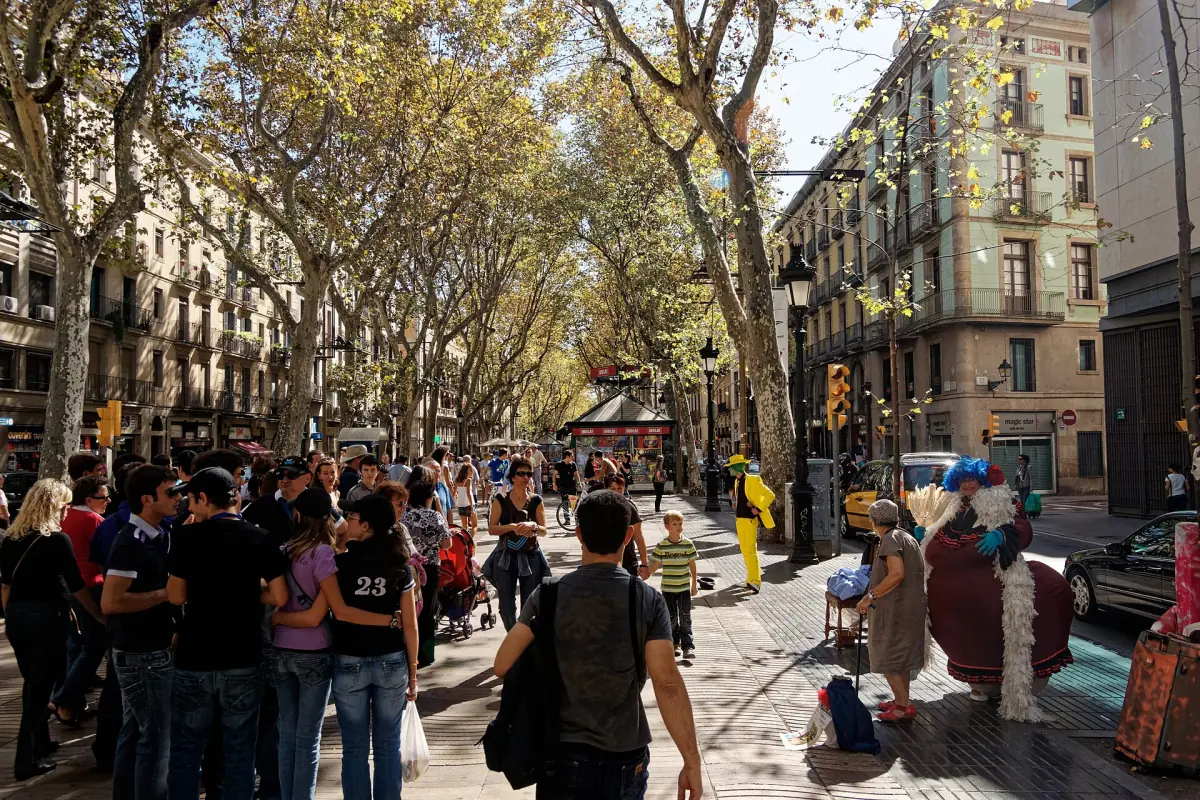
La Rambla history: from stream bed to boulevard
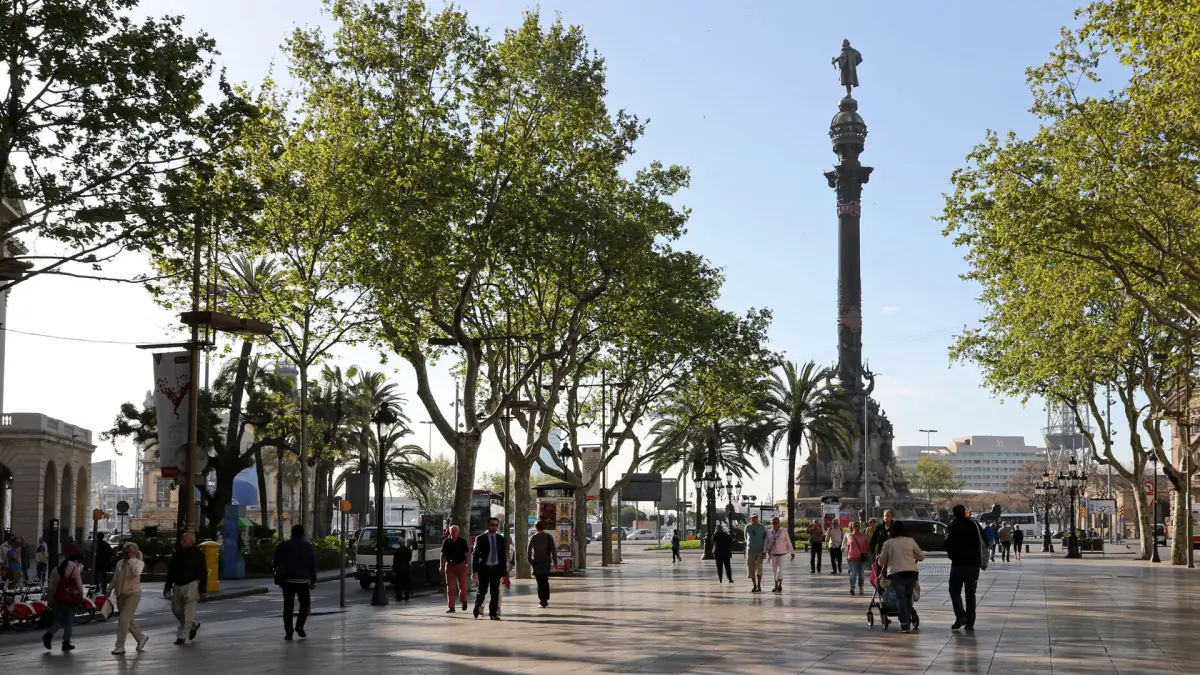
La Rambla started as a natural stream bed, a torrent that ran beside the walls of old Barcelona. For centuries it marked the edge of the walled city. Convents and colleges settled along it, and the street later took the names of the places that stood there. Only over time did it turn into the promenade of today.
The street runs about 1.2 km from the Plaça de Catalunya to the Columbus Monument and is divided into five named sections. To walk the history with a guide, Barcelona walking tours usually cover the Rambla and the old town. The dates below show how the stream bed became a boulevard.
La Rambla timeline
The main dates, from the first trees to the current rebuild.
| Year | What happened |
|---|---|
| 1701 | The first trees are planted along the street. |
| 1758 | Public lighting is installed. |
| 1772 | The first plan to urbanize the street is drawn up. |
| 1847 | The Gran Teatre del Liceu opens. |
| 1861 | A fire on 9 April destroys the Liceu's hall and stage. |
| 1886–1890 | The Palau Güell is built for Eusebi Güell, designed by Antoni Gaudí. |
| 1888 | The World Exhibition, to which the Columbus Monument belongs. |
| 1976 | Joan Miró's mosaic is inaugurated at the Pla de l'Os. |
| 1994 | A second fire at the Liceu on 31 January. The Rambla de Mar is designed in the same year. |
| 1999 | The Liceu reopens after its rebuild on the same site. |
| 2017 | The attack of 17 August. See the section below. |
| 2027 | Target year for finishing the reconstruction of the street. |
Our pick: old town and Montjuïc
Our take: this walk links the old town with the castle above the harbour.
Hand-picked tours, booked through GetYourGuide. Prices are indicative starting prices in euros (as of October 2026). Tap a tour for live availability and the current price in your currency.
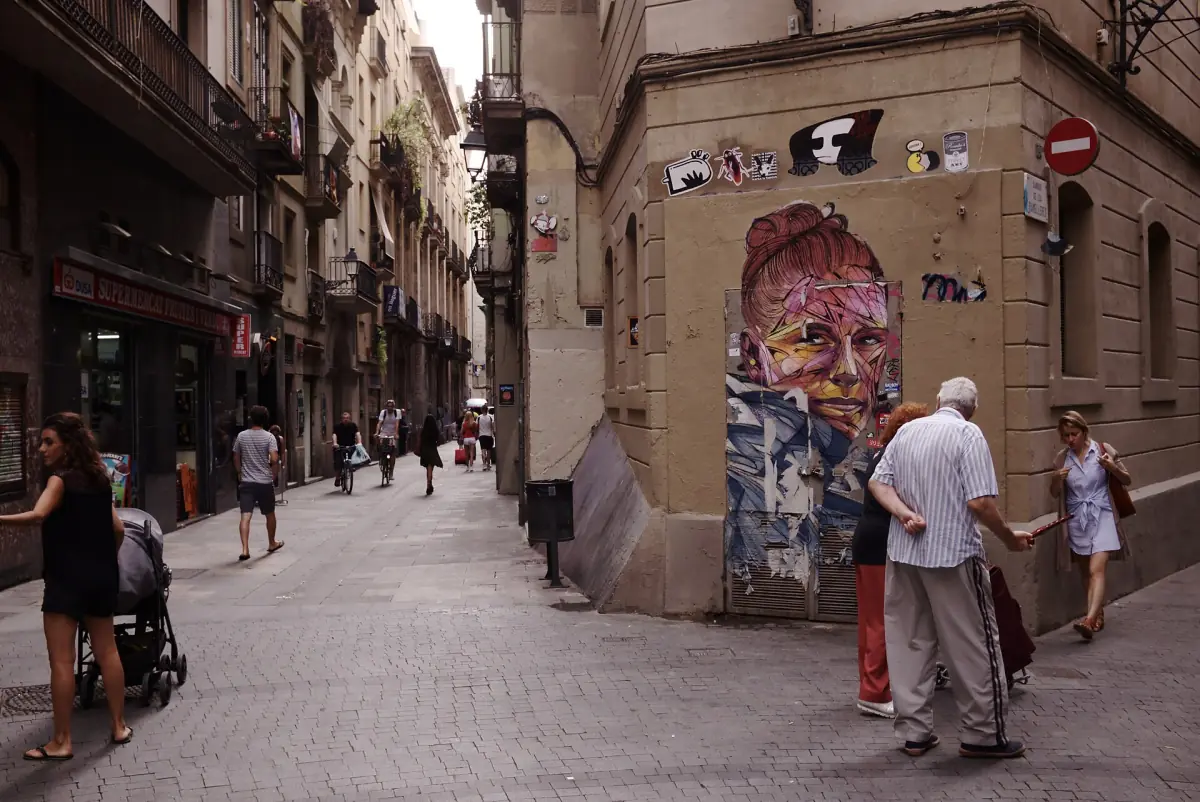
Walks through La Rambla and the old town
Guided walks along the street and into the Gothic Quarter, with live prices and availability.
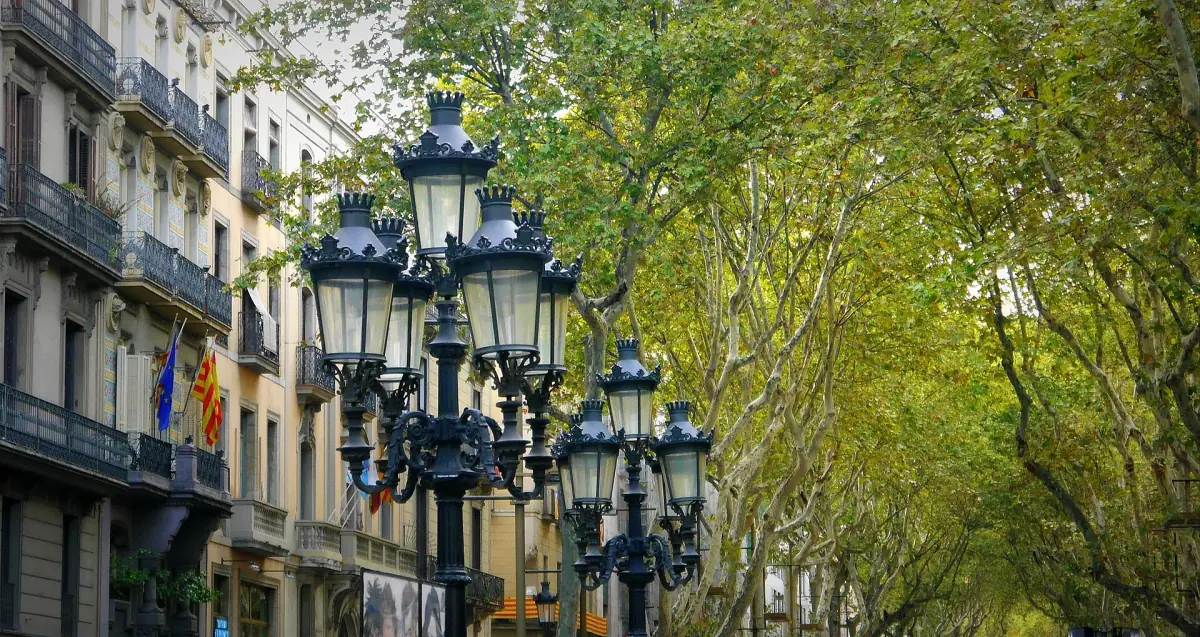
Trees, lamps and a straight line
The street changed in steps. The first trees came in 1701, which started the idea of a shaded promenade. Public lighting followed in 1758, and the first plan to urbanize the street was drawn in 1772. In the same phase the old medieval wall along the Rambla was taken down, and the street was set on a straight line between Betlem and Drassanes.
That is only one wall coming down on one street. It is not the same event as the demolition of all of Barcelona's city walls, which happened much later. When you see the street today, you are seeing the result of this slow reshaping, not a single act of planning.
The five sections and what their names mean
From the top at Plaça de Catalunya to the harbour.
Canaletes
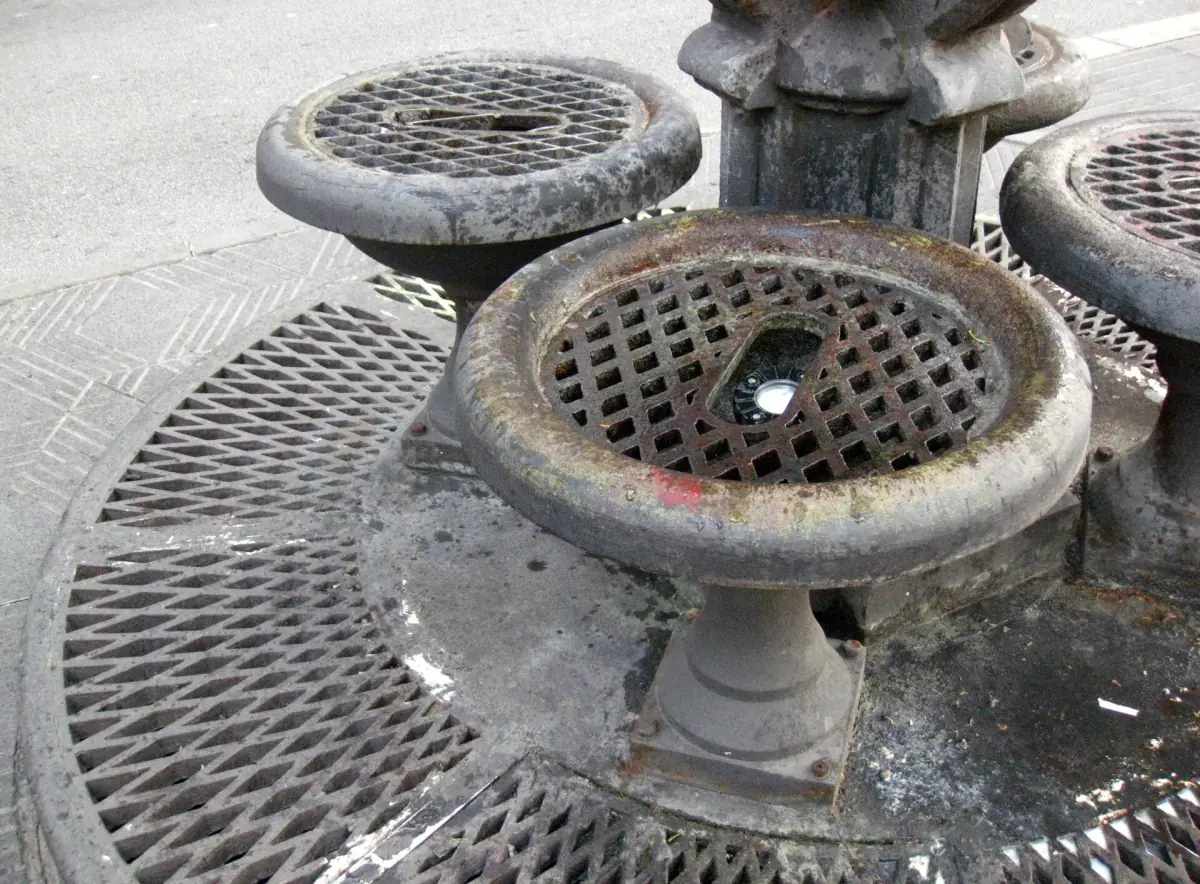
The top section, with the Font de Canaletes fountain. A legend says that anyone who drinks its water will return to Barcelona. It is a story, not a fact.
Estudis
The name recalls a former university site on the street.
Sant Josep or Flors
The middle section is called Flors or Sant Josep.
Caputxins
Named after a Capuchin convent.
Miró's mosaic and the memorial at Pla de l'Os
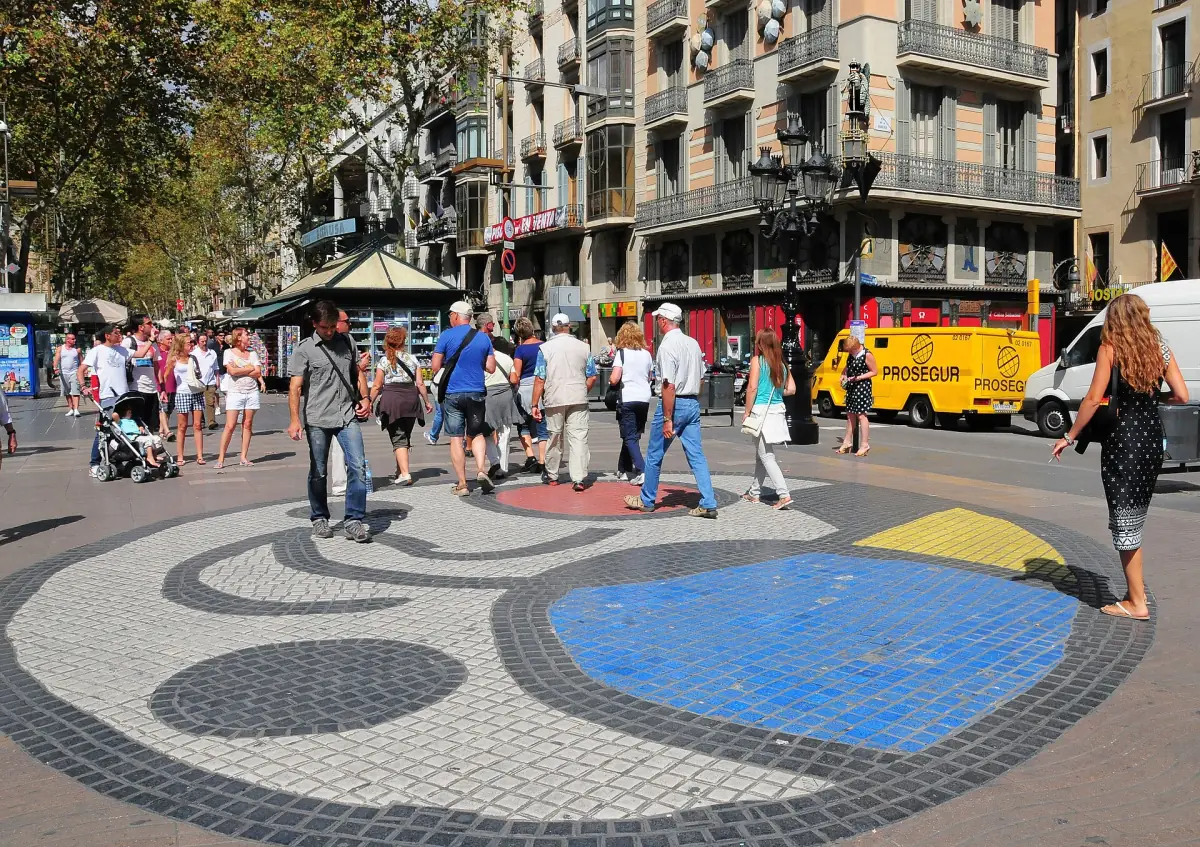
On the pavement of the Pla de l'Os lies a mosaic by Joan Miró, inaugurated in 1976. It is set into the street, so look down as you pass. The Boqueria market is at La Rambla 91 and the Liceu at La Rambla 51–59, and both have their own pages: Boqueria guide and Liceu guide.
On 17 August 2017 a terror attack took place on La Rambla. Across the attacks of those days, 16 people died and more than 100 were injured. A memorial set into the ground beside the Miró mosaic, set up in 2019, remembers the victims. Please treat the place with respect when you pass.
La Rambla today
The street is being rebuilt from the Portal de Santa Madrona to the Plaça de Catalunya, with a project budget of €55.6 million and completion aimed for 2027. Works on the central promenade continue, so do not expect a finished street.
An information point, Espai Rambla, is in the Palau de la Virreina at La Rambla 99, open Monday to Friday 10:15–18:15. Check the hours before a special trip. For the wider Gaudí story across Barcelona, see the Gaudí buildings guide.
La Rambla history: frequently asked questions
How old is La Rambla?
It began as a natural stream bed beside the medieval walls. Its first trees date from 1701, public lighting from 1758 and the first plan to urbanize it from 1772.
How is La Rambla divided?
The street is divided into five named sections: Canaletes, Estudis, Sant Josep (also called Flors), Caputxins and Santa Mònica. Several names recall former colleges and convents along the street.
What is the story of the Font de Canaletes?
A legend says that anyone who drinks from the fountain will return to Barcelona. It is a tradition, not a fact.
Where is the Miró mosaic?
At the Pla de l'Os, set into the pavement. It was inaugurated in 1976. A memorial for the victims of the 2017 attacks was set up beside it in 2019.
What happened on La Rambla in August 2017?
A terror attack took place on 17 August 2017. Across the attacks of those days, 16 people died and more than 100 were injured. The memorial at the Pla de l'Os remembers them.
Is la-rambla.org an official history source?
No. This is an independent travel guide with no link to the City of Barcelona, Turisme de Barcelona or any museum.